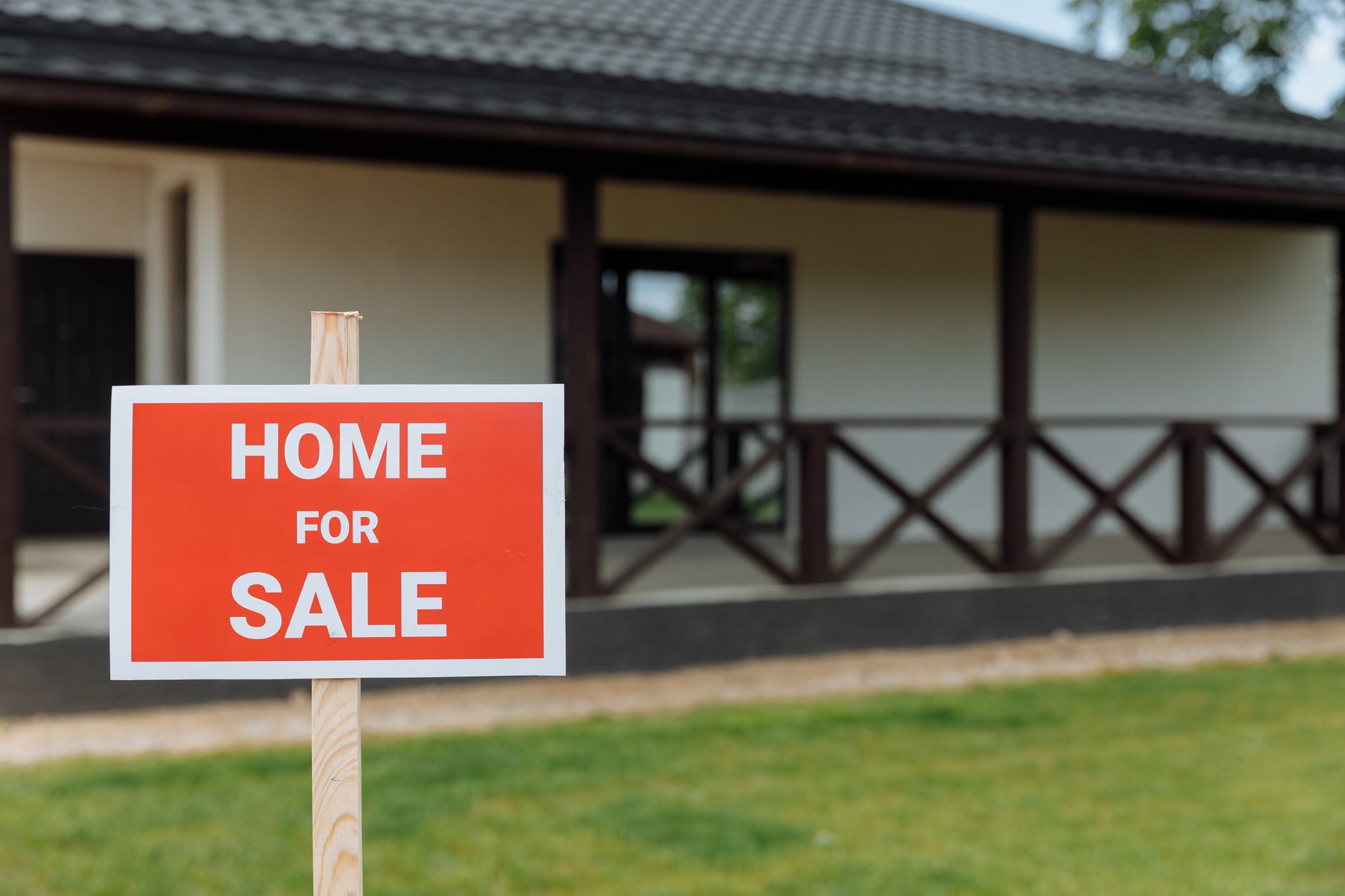
Photograph: _ Whittington on Pexels
Find out why it sat, then negotiate the terms as well as the price. GTA sales averaged 97 per cent of the average asking price in July 2026, on 32 days.
Homes that sold across the Greater Toronto Area in July 2026 had been listed for an average of 32 days, or 45 days counting earlier listings of the same property, and the average selling price came in at 97 per cent of the average listing price, according to the Toronto Regional Real Estate Board.
A listing that has been up for weeks is the ordinary case now rather than a warning sign, and that changes how you approach it.
How do you negotiate on a home that has been sitting?
Find out why it has sat, then negotiate the terms as well as the price.
On a listing with nobody else in front of it, a seller's flexibility is usually spread across the closing date, the conditions and what stays in the house, and each of those is worth real money to a buyer. A number pulled off the asking price without knowing why the home is still available is a guess, and it is the kind of guess a seller can read.
The market gives you room to ask. The board reported 5,995 sales against 14,484 new listings in July 2026, so sales ran at about 41 per cent of new listings. The Canadian Real Estate Association describes readings roughly between 45 and 65 per cent as consistent with balanced conditions, and put the national ratio at 51.3 per cent for the same month. There were 26,098 active listings across the board's area at the end of July, and 4.6 months of inventory on its twelve month measure.
Does a long time on the market mean something is wrong with the house?
Usually it means the price is wrong, not the house.
The averages moved, not just this one listing. Homes that sold in July 2026 had been listed 32 days against 30 days a year earlier, and 45 days against 40 on the measure that counts earlier listings of the same property. A home that has been available for a month is sitting alongside the market, not behind it.
Three things go wrong more often than the building.
- The asking price was set against a stronger month. The average selling price was $1,003,956 in July 2026, down 4.5 per cent from a year earlier, and the board's home price index composite was down 4.6 per cent. A price anchored to what a neighbour got last spring is above what buyers are paying now, and time on its own does not fix that.
- The listing shows badly. Photographs taken in poor light, awkward viewing hours, a tenant who will not allow access. None of it is about the house, and all of it costs the seller buyers.
- Something a buyer found and walked away from. This is the one that is genuinely about the house, and it is the least common of the three. An inspection is how you find out. The calendar is not.
How do you find out why it has been sitting?
Ask for the listing history, and read both days on market numbers.
The board publishes two and they answer different questions. Average Listing Days on Market "refers to the average number of days sold listings were on the market". Average Property Days on Market counts the days before selling "irrespective of whether the property was listed more than once by the same combination of seller and brokerage during the original listing contract period".
The practical difference is that taking a home off the market and putting it back on restarts the listing clock and not the property one. Across the region in July the gap between the two averages was 13 days. On a single property, a wide gap between them means it has been listed before.
Four more questions are worth asking before anyone talks about price.
- When the price changed, and by how much each time.
- Whether an offer came in and did not firm up, and which condition it died on.
- When the sellers need to close, and whether they have already bought.
- What has been done to the home since it was first listed.
We set out the timing side of this from the seller's chair in our guide on how long it takes to sell a house in the GTA.
How much below asking should you offer?
There is no fixed percentage, and the published ratio is a starting point rather than a rule.
Across all of the board's areas in July 2026 the average selling price was 97 per cent of the average listing price. The board calculates that as the ratio of the average selling price to the average listing price for firm transactions in the month, so it describes the region and not any one home. In the condominium apartment segment the ratio was also 97 per cent, on an average of 40 days on the market.
What the ratio cannot tell you is whether this asking price was ever a real number. A discount only means something if the figure you are discounting means something. A home listed well above what comparable properties have sold for, then reduced twice, is not a bargain at 97 per cent of the reduced number. Work out what the home is worth first, then look at the gap between that and the asking price. The percentage is the outcome, not the target.
What can you ask for besides a lower price?
Each of these costs the seller something other than cash, and on a listing that has been sitting there is usually room for more than one of them.
- The closing date. It costs a seller nothing if the date suits them, and it is worth more than money to one who has already bought somewhere with a fixed closing.
- Time, and the conditions themselves. Financing and inspection conditions are the first things buyers gave up when they were competing with each other. A home with no competing offer is where you keep them.
- The status certificate, on a condominium. The corporation must respond within 10 days of receiving the request and the payment, and cannot charge more than $100 including taxes, under section 76 of the Condominium Act, 1998. Build those days into the condition period rather than hoping they fit. Our guide covers what to look for once it arrives.
- What stays. Appliances, window coverings, the shed, the light fittings you assumed were included.
- Repairs, or a credit instead of them. A credit is usually cleaner than a repair done in a hurry by somebody who is leaving.
- The deposit. Its size and timing are negotiated in the agreement, and we set out how that works in our guide on how much deposit you need to make an offer.
What does a home sitting not tell you?
It does not tell you the seller is under pressure, and it does not tell you nobody else wants the house.
Plenty of sellers have no deadline and will wait out a low offer rather than take it. Nothing in a listing's age tells you which kind you are dealing with.
Two figures from the same July release sit side by side and are both true. Homes took longer to sell than they did a year earlier, and there was less to choose from: new listings were down 17.8 per cent year over year and active listings were down 12.1 per cent. A buyer this summer has more time on any one home and fewer homes in total than a buyer had a year ago.
Competition has narrowed rather than disappeared, and where it still turns up it turns up quickly. We wrote about which homes those are in our guide on whether bully offers still happen in a slow market.
What changes on your side when the price comes down?
Ontario land transfer tax follows the purchase price. The province charges it on the value of the consideration, which includes the purchase price, and Toronto charges a municipal land transfer tax on top of it for homes inside the city. Our land transfer tax calculator gives you both.
The deposit, the mortgage and the cash you need on closing all move with the price too. If the number changes mid negotiation, run it again before you agree to it.
Where to start
- Ask for the listing history and both days on market figures before anyone talks about price.
- Work out what the home is worth to you, then look at the gap.
- Decide which terms are worth more to you than a few thousand dollars, and ask for those alongside the number.
- Keep the conditions. A home that has been sitting is the one place you do not have to trade them away.
If you are working through this on a particular home, start here.
Sources
Get it before it is news
A short note when we publish something worth your time about the Toronto and GTA market. No more than that.