Photograph: RDNE Stock project on Pexels
Ontario landlords must use the standard lease, keep the unit in repair, give 24 hours' written notice to enter, and cap 2026 rent increases at 2.1 per cent.
Renting out a unit in Ontario puts you under the Residential Tenancies Act, 2006, and the Act is specific. It tells you which lease to use, how warm the unit has to be, what you can collect as a deposit, how much notice you owe before raising the rent or knocking on the door, and who is allowed to end a tenancy. Most of what goes wrong at the Landlord and Tenant Board comes from the same short list, and nearly all of it is avoidable.
Here is what the province and the Board require, with the figures that apply now.
Do you have to use the Ontario standard lease?
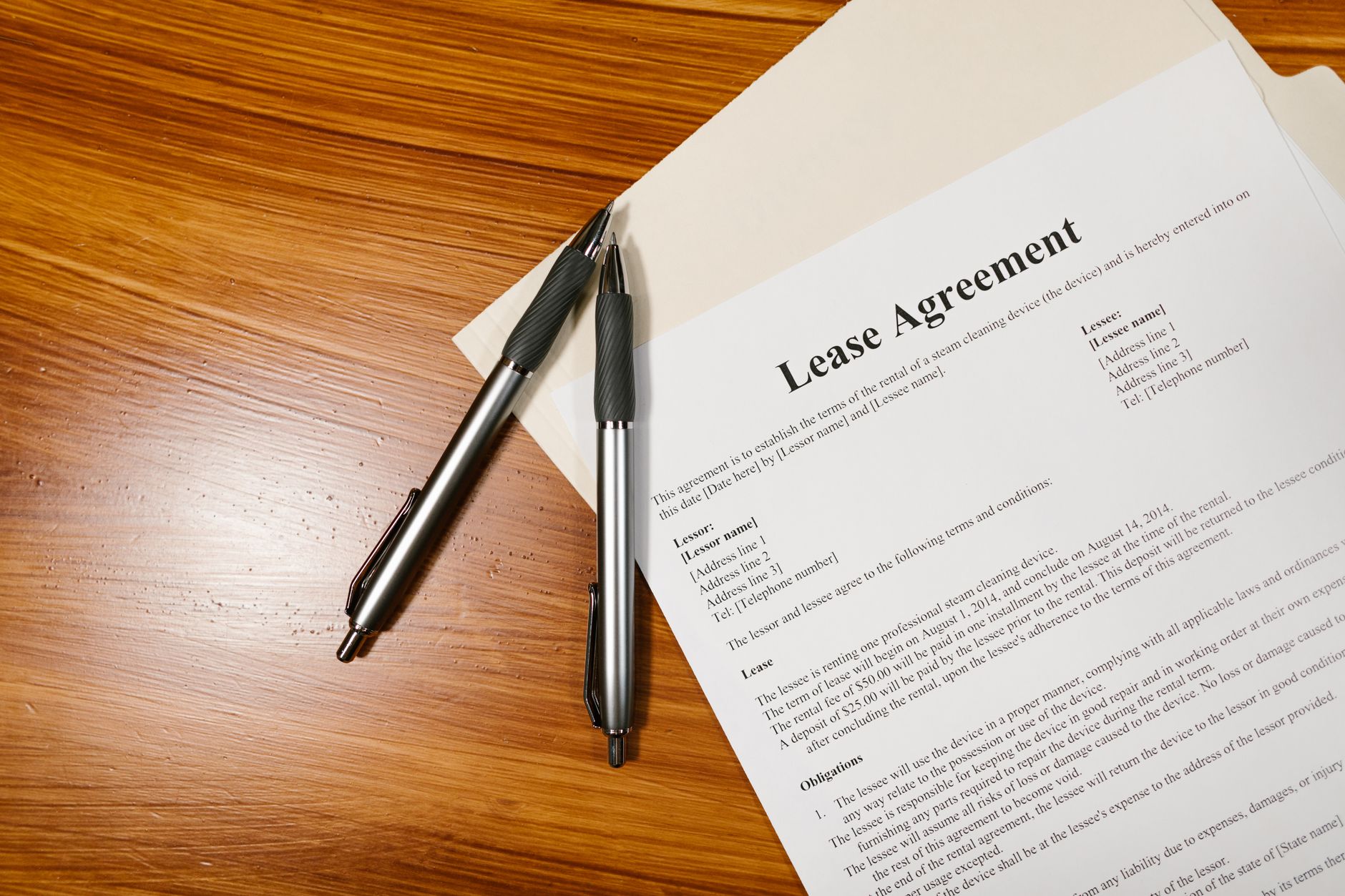
Yes, for most residential tenancy agreements first entered into on or after April 30, 2018. The Landlord and Tenant Board puts it plainly: for those tenancies the landlord must use the Residential Tenancy Agreement (Standard Form of Lease). The standard lease does not apply to care homes, sites in mobile home parks and land lease communities, most social and supportive housing, or co-operative housing.
Skipping it costs money. Under the Ministry of Municipal Affairs and Housing's guide to the standard lease, a tenant entitled to one can ask in writing, and you then have 21 calendar days to provide it. If you do not, the tenant can withhold one month of rent. If it still has not arrived 30 calendar days after that, the tenant keeps the withheld rent, and a tenant on a fixed term gains the right to end the lease early. You also have to give the tenant a copy of the signed agreement within 21 days of them signing it.
What repairs are you responsible for?
Effectively all of them. The landlord must keep the rental unit and the property in good repair and comply with all health, safety and maintenance standards. That covers what came with the unit, such as appliances, and the common areas, including parking lots, elevators and hallways.
Two things sit on the other side. A tenant still has to pay rent while a repair is outstanding, and a tenant is responsible for damage caused by them, their guests or anyone else living in the unit, whether on purpose or through carelessness.
How warm does the unit have to be?
Heat is a vital service, and the province sets a floor. The landlord must make sure the unit has heating equipment capable of maintaining a minimum of 20 degrees Celsius from September 1 to June 15. Municipal bylaws can be stricter, and Toronto's is. The City requires a minimum of 21 degrees from October 1 to May 15, with room for judgement in the shoulder weeks of September 15 to October 15 and May 1 to June 1, when a unit already sitting at 21 degrees without heating needs none.
Vital services are hot or cold water, fuel, electricity, gas and heat. You cannot withhold or shut any of them off, and if a service stops because you did not pay the bill, that counts as withholding it.
What can you collect as a deposit?
Last month's rent and a refundable key deposit, and nothing else. No damage deposit and no pet deposit. The rent deposit cannot be more than one month's rent, or one rental period's rent where that is less, and it has to be applied to the final rental period rather than held against damage. You owe the tenant interest on that deposit every year, and the rate is the rent increase guideline. If the rent rises you can ask the tenant to top the deposit up, and the interest can be used to do it.
Receipts are free. If a tenant, or a former tenant within 12 months of the tenancy ending, asks for a receipt for rent or for any payment or deposit, you have to provide one and you cannot charge for it.
How much can you raise the rent in 2026?
By 2.1 per cent for most units. Ontario's rent increase guideline is 2.1 per cent for 2026 and 1.9 per cent for 2027. Rent can go up only if at least 12 months have passed since the tenancy began or since the last increase, and you must give at least 90 days written notice in the Board's own form.
The guideline does not apply to new buildings, additions to existing buildings and most new basement apartments occupied for the first time for residential purposes after November 15, 2018. Anything above the guideline needs an order from the Board, and the service deadlines on those applications tightened this summer.
When can you enter the unit?
With 24 hours written notice, between 8 a.m. and 8 p.m., and only for a reason on the list. The Board sets out the reasons: to make repairs, to inspect whether repairs are needed, to show the unit to a possible buyer, insurer or mortgage lender, to let a real estate agent show it, to carry out an inspection before a condominium conversion, or for a reasonable purpose written into the tenancy agreement. The notice has to state the reason and the date and time. With proper notice you can enter when the tenant is out. No notice is needed in an emergency or when the tenant consents.
Locks are part of the same rule. You cannot change the locks unless you give the tenant the new keys.
Can you end a tenancy yourself?
No. You give notice, and if the tenant does not leave you apply to the Board, which holds a hearing before deciding. Even with an eviction order in hand, a landlord cannot personally enforce it. Only the Court Enforcement Office, the Sheriff, can remove a tenant or change the locks.
No fault notices come with compensation. For a landlord, family member or caregiver moving in, it is an amount equal to one month's rent, or another acceptable unit. For repairs, demolition or conversion it is one month's rent where the building has fewer than five units and three months' rent where it has five or more. In a mobile home park or land lease community it is one year's rent or $3,000, whichever is less.
What changed on July 1, 2026?
The penalties roughly doubled. Tribunals Ontario's operational update records that the maximum fine under section 236 rose from $50,000 to $100,000 for an individual and from $250,000 to $500,000 for a corporation. The window to ask the Board to review an order fell from 30 days to 15. Service deadlines on above guideline rent increase applications dropped from 14 days to 7, with the certificate of service due within 5 days. Repayment plans now use the Board's payment agreement form.
Air conditioning changed too. Tenants may install a window or portable unit where the conditions are met, and where electricity is included in the rent a landlord may charge a seasonal increase for it. Tribunals Ontario says further amendments from Bills 60 and 97 are scheduled to take effect in September 2026.
The part most owners get wrong
It is rarely the big rules. It is the deposit that was called first and last, the rent increase served 60 days out instead of 90, the text message that stood in for a notice of entry, and the lease that was never the standard one. Each of those hands a tenant a defence, and the Board hears the file on the paperwork in front of it.
If you are buying a rental property rather than already holding one, the arithmetic before closing matters as much as the rules after it. Our land transfer tax calculator covers the largest closing cost in Toronto, our guide to capital gains on a second property covers what happens when you sell, and we are happy to talk through a purchase on our buying page.
This is a summary of published rules as at September 4, 2026, not legal advice. Rules change, and the Board's own materials are the place to check before you act.
Sources
Get it before it is news
A short note when we publish something worth your time about the Toronto and GTA market. No more than that.