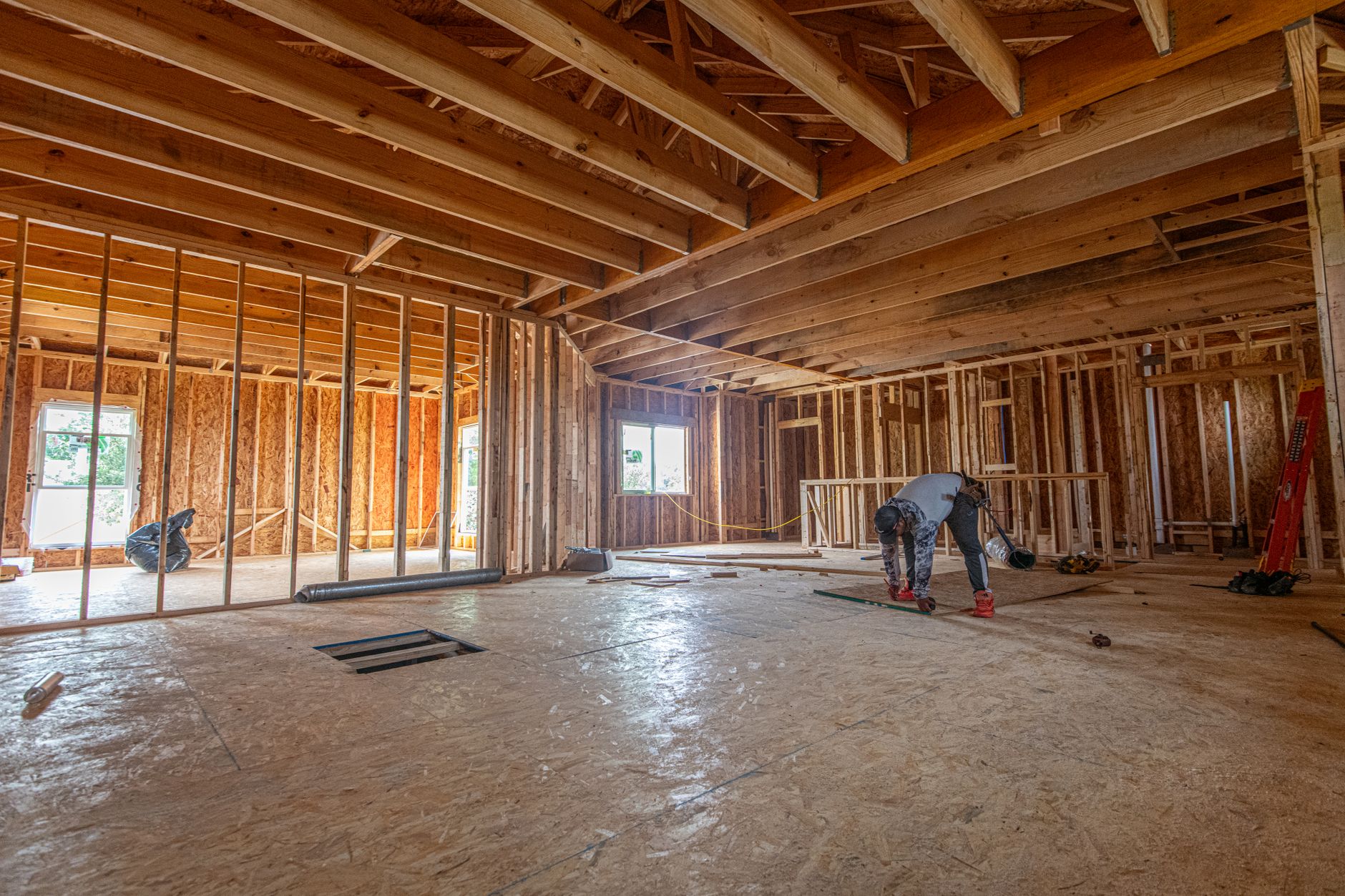
Photograph: Ryan Stephens on Pexels
Tarion covers a new Ontario home for one, two and seven years, up to $400,000 on a freehold. Your deposit is protected up to $100,000 before closing.
Every new home built in Ontario comes with a warranty. Your builder provides it, Tarion backs it, and it runs for up to seven years from the day you take possession. It protects your deposit before you ever get a key.
The coverage is worth real money. On a freehold home bought under an agreement signed on or after 1 July 2023, the statutory warranty is worth up to $400,000, and deposit protection runs to $100,000. What catches people out is not the coverage. It is the calendar. The claim forms open and close on fixed days after possession, and since 1 April 2026 there is a new one that starts 45 days after you sign.
What does the Tarion warranty cover?
Three periods, and all of them start on your date of possession, or your occupancy date in a condominium.
Year one is the widest. It requires that the home is constructed in a workman-like manner and free from defects in material, protects against unauthorized substitutions, requires the home to be fit for habitation, and protects against Ontario Building Code violations. That is the year to be fussy in, because almost everything is claimable.
Year two narrows to the building envelope and the systems. It covers water penetration through the basement or foundation walls, defects in work or materials that cause exterior cladding to detach, displace or deteriorate, defects in the electrical, plumbing and heating delivery and distribution systems, and Building Code violations that affect health and safety. These are the faults that tend to appear after one Ontario winter rather than in the first month.
Years three to seven cover major structural defects only. Tarion defines a major structural defect as a defect in the load bearing parts of the home that results in failure, materially affects the load bearing capacity of the home over its ordinary service life, or materially affects the use of a significant part of the home. A foundation wall that is moving is a candidate. A cracked floor tile is not. The full definition is on Tarion's coverage page.
Coverage begins when you sign the agreement of purchase and sale, and stays in effect for up to seven years even if the home is sold. A resale buyer who moves into a four year old house inherits whatever is left of the seven year period.
How much coverage do you actually get?
The limit is set by the date you signed the agreement, not the date you closed. Tarion publishes three tiers:
- Signed on or after 1 July 2023: $400,000 for a freehold home, $300,000 for a condominium unit, and $100,000 times the number of units for condominium common elements, to a maximum of $3.5 million.
- Signed between 1 February 2021 and 30 June 2023: $300,000 for a freehold home or a condominium unit, with the same common elements limit.
- Signed before 1 February 2021: $300,000 for a freehold home or a condominium unit, and $50,000 times the number of units for common elements, to a maximum of $2.5 million.
A pre-construction buyer who signed in 2020 and takes occupancy this year is on the oldest tier. The signing date is the one to look up.
What protects your deposit before you close?
For a freehold home under an agreement signed on or after 1 January 2018, deposit protection is up to $60,000 where the purchase price is $600,000 or less. Above that price it is 10 per cent of the purchase price, to a maximum of $100,000. Agreements signed before 2018 are covered to $40,000.
Condominiums work differently. The builder is required by the Condominium Act to hold your deposit in trust, and the warranty sits behind that with deposit protection of up to $20,000 if the money was not placed in trust and is not returned.
There is one new step, and it is the reason to read this section twice. Since 1 April 2026, a buyer of a freehold home has to give Tarion notice of the purchase within 45 days of signing the agreement of purchase and sale. Tarion has deferred the effect on coverage until 1 January 2027, so registering late does not cut your protection yet. After that date, buyers who register late are covered under a sub limit paid from a special fund of $15 million a year rather than at the full amount. The requirement applies to freehold homes, not to condominiums or contract homes. Tarion sets this out in its deposit protection questions and answers. Registering is free and takes minutes, so do it in the week you sign.
What happens if your builder misses the closing date?
If closing is delayed past the firm closing date, and the delay is not by mutual agreement and not an unavoidable delay, the builder owes you compensation. It is a fixed $150 a day for living expenses, to a maximum of $7,500.
You do not need receipts for direct living expenses such as meals and accommodation. You do need receipts for other costs caused by the delay, such as moving and storage.
Your builder has to give you 10 days notice of a delay. If that notice does not come, you are compensated $1,500, which is the same $150 a day for 10 days.
The exception is an unavoidable delay: an extraordinary event outside the control of both the builder and the buyer, such as a strike, a fire, a civil insurrection, an act of war or terrorism, or a pandemic. Where one applies, the builder can extend the dates by the length of that delay without paying compensation.
Claiming is a form with a deadline like everything else here. The delayed closing or delayed occupancy form has to be filed within one year of the date you take possession.
Which warranty forms do you have to file, and when?
This is where coverage is actually won or lost. Tarion's claim forms and timelines run on day counts from possession, and the forms submit themselves whether or not you have finished filling them in.
- Initial Form. You can start adding items one day after possession. It is automatically submitted on day 41.
- Mid-Year Form. Items can be added from day 42. It is automatically submitted on day 183.
- Year-End Form. Items can be added from day 183. It is automatically submitted on day 365, with a 10 day grace period. This is the last chance to report anything covered by the one year warranty, and Tarion's own wording is that if you do not submit it before the deadline you may risk not having certain items covered.
- Second-Year Form. Can be submitted at any time during the second year of possession.
- Major Structural Defect Form. Can be submitted any time after the second year of possession and no later than seven years from the date of possession.
The practical habit: keep a running list from the day you move in and add to the open form as you notice things, rather than trying to remember everything in the last week of a period.
What is not covered?
Tarion publishes the exclusions in full. The ones that come up most often are normal wear and tear, normal shrinkage of materials as they dry after construction, damage caused by the homeowner or visitors, alterations or additions made by the homeowner, defects in materials or design supplied by the homeowner, damage from inadequate ventilation, settling of the land around the building other than beneath the footings, damage caused by insects or rodents except where the construction does not meet specifications, damage caused by municipal services or utilities, and surface defects in work and materials that the homeowner accepted in writing.
Secondary damage caused by a defect that is under warranty, such as damage to your own property, is also excluded. That is worth knowing before you assume a leak will pay for the ruined flooring underneath it.
Before you sign anything
The warranty is your builder's obligation first and Tarion's backstop second, so the builder is who you deal with on repairs. Read the statement of critical dates in your agreement, note your signing date, register the purchase within 45 days if it is freehold, and put the day 41, day 183 and day 365 dates in your calendar the week you take possession.
If you are pricing a new build, two other numbers matter as much as the warranty: what you get back through the HST rebate on a new build and what you pay on top of the purchase price in closing costs. We can walk through both against a specific agreement.
Sources
Get it before it is news
A short note when we publish something worth your time about the Toronto and GTA market. No more than that.